
When You Stop Treating Life Like a Problem

.png)
Why presence changes more than overthinking ever will
A few weeks ago, I caught myself halfway through a conversation, nodding, responding, saying all the right things and not actually hearing a word the other person said.
I was already thinking about what to say next. What I needed to do after. What this conversation meant.
From the outside, I looked present.
From the inside, I was somewhere else.
That’s when it clicked.
We’re taught to approach life like a puzzle. There’s always a next step, a better decision, a takeaway to find. That mindset works. It helps you stay organized and capable in environments that reward action.
But over time, it can become the only way you know how to engage with what’s happening.
And not everything improves when you try to figure it out.
When Thinking Replaces Connection
There’s a difference between thinking about your life and living it, and a lot of people live in that gap without realizing it.
You’re in a conversation, but your attention is already shifting to what you’ll say next. You’re going through your day, but your mind keeps jumping ahead or pulling you backward. Even downtime can start to feel managed.
You’re there, but not fully.
That carries into how you connect. When part of your attention is elsewhere, conversations lose depth. You may be engaged, but there’s a difference between responding and reacting without thought. People can feel that, even if they can’t explain why.
The Limits of Control
A lot of this comes from trying to stay ahead. Thinking through every angle feels like the responsible way to handle uncertainty.
Not everything responds to that approach.
Think about a morning where all is planned. You know what needs to happen and when. Then something small disrupts it. The instinct is to tighten your grip and force things back into place.
Usually, that’s when tension rises.
The effort to control what’s happening often creates more strain than the situation itself. Not because planning is wrong, but because not everything needs to be corrected in real time.
Some things only make sense after they’ve played out.
What Changes When You Stop Forcing It
You start to take in what’s in front of you instead of constantly interpreting it. Conversations feel more complete. Decisions feel less rushed. There’s less pressure to get it right immediately.
You become more grounded in what’s real.
Nothing about your circumstances has to change for that to happen. You change your perspective to enjoy the moment.
What We See at Modern Revival
At Modern Revival, we see how often we stay in a constant state of management. There’s always something to track, anticipate, or handle.
It works, but it’s exhausting.
Presence shows up in small, ordinary parts of the day. Sitting with someone without thinking ahead. Letting something be enjoyable without turning it into something else. Pausing without immediately filling the space.
That’s where the shift happens. Life stops feeling like something to manage and starts feeling like something you’re actually living.
A Practice You Can Try Today
Here’s where to start.
Pick one part of your day you would normally rush through or mentally move past.It could be your coffee. A conversation. A short walk. A few minutes between tasks.
Instead of filling that space or getting ahead of it, stay with it.
No improving it.
No takeaway.
No trying to get something out of it.
Just notice what’s happening.
Your mind will wander. That’s normal. The shift is catching it and bringing your attention back.
Do this once today.
That’s it.
You’ll feel the difference immediately. And if you keep returning to it, those small moments start to change how your days feel as a whole.
Bottom line
It’s hard to just “be” when you approach life like a puzzle to solve.
You don’t need to rethink your life. You need to experience it.
Stop trying to master your life. Be present for it. It’s meant to be enjoyed.
In the News
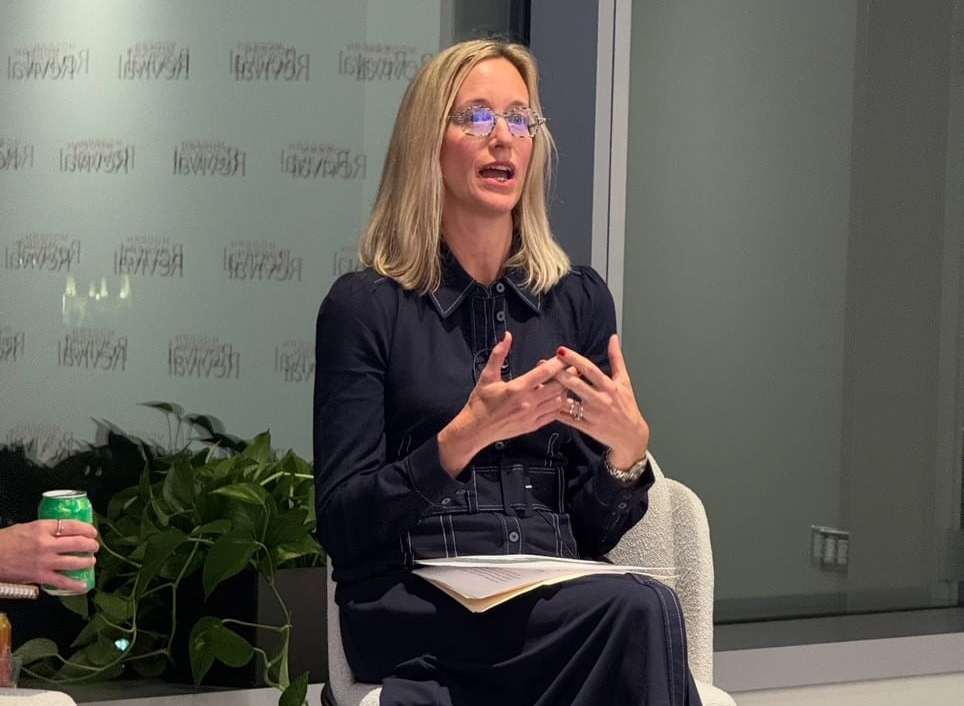
Heather Hostetter As Featured Speaker at Modern Revival Women's Experience October

Mikel Blair Of Modern Revival On How Authenticity and Vulnerability Pay Off and Help You Win Personally and Professionally

